Chapter 12 of the Sprint DGX series. How a model trained on eight GPUs will slot into a dental system that’s already in the clinic, without the professional having to change a thing about how they work.
In AI, it’s easy to show a slick demo. The hard part, and the part that truly matters, is getting something to work every day, in the hands of someone who has no time for it to fail. We started from an unusual advantage: the product already existed and was already in production. What we did over these 60 days wasn’t build a prototype, but train the hardest piece of all, the intelligence, to improve a system that was already in a clinic, treating real patients.
What was already working
An AI-powered dental management system, in production and stable: several thousand patients, hundreds of thousands of images under management, and the day-to-day work of a clinic (scheduling, reminders and the rest of practice management), all running on real software, not on a promise.
That’s the foundation. The sprint didn’t come to replace it; it came to give it a better brain.
What the sprint trained
The vision and clinical-reasoning layer: the next generation of that brain. Bigger, truly multimodal (it looks at the X-ray, not its description), and bilingual with verified parity. It’s precisely the part most products in this sector don’t have, because it’s the most expensive and the hardest to get right.
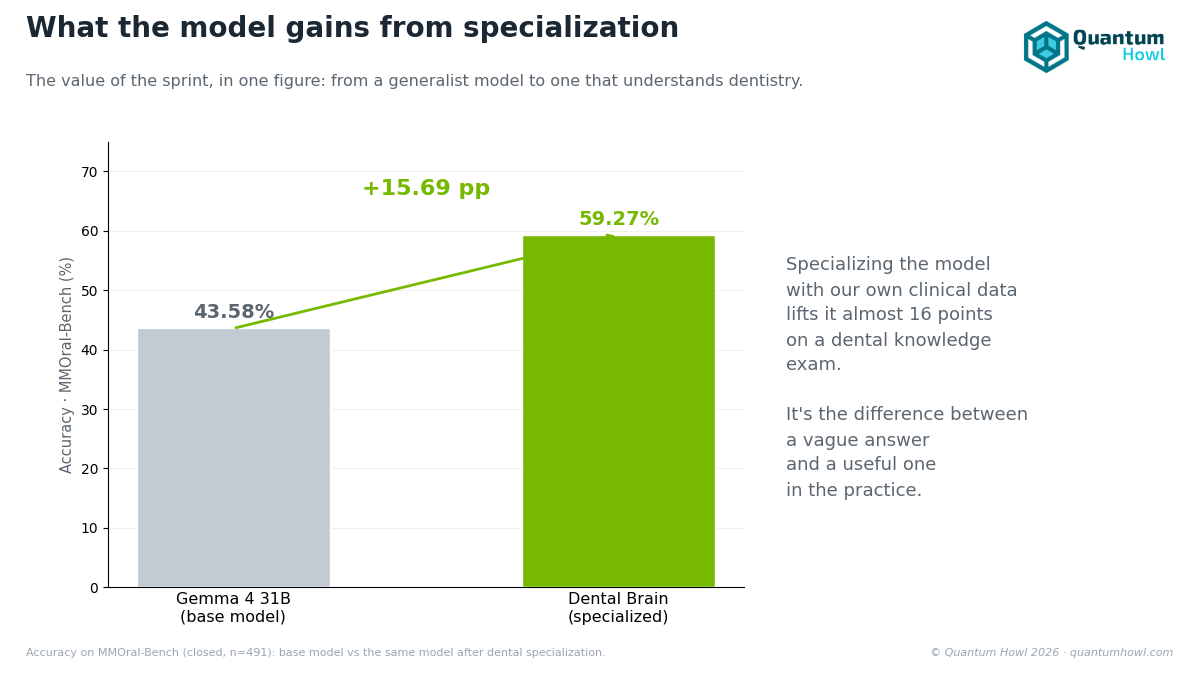
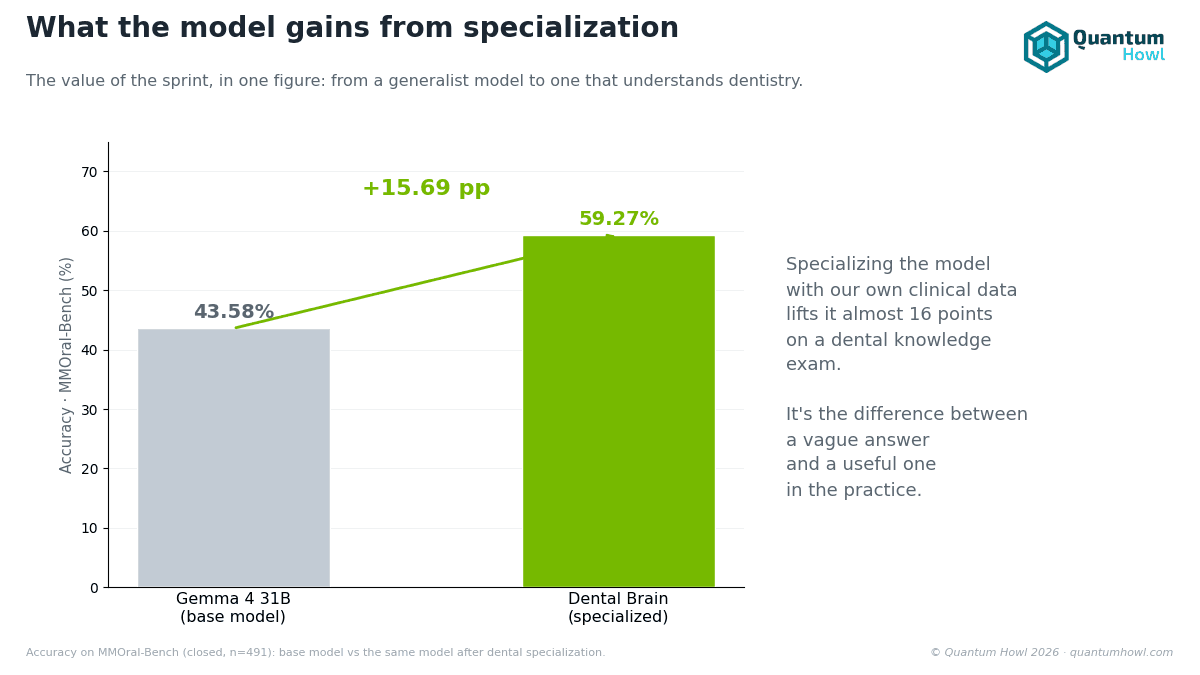
Specializing the model with your own clinical data is the difference between a vague answer and one that’s actually useful in the practice.
How it plugs in without breaking anything
Here’s the engineering decision that makes it viable: the new model speaks the same standard technical language as the previous layer. For the system, swapping the engine means changing a connection address, not rebuilding the car. The professional won’t notice a change in workflow; they’ll notice better quality.
And it’s designed to run on-premise, on an NVIDIA DGX Spark, inside the clinic, so that patient data never leaves the building.
What changes for the dentist (and what doesn’t)
What will change is what’s under the hood: better answers on the complex cases, where a smaller model fell short or gave a vague reply, genuine reading of the image, the same quality in Spanish, and a consistent latency that keeps pace with the consultation instead of making it wait.
What won’t change is any of what the professional already knows: their workflow, their screen, their way of working. The improvement is invisible on the surface and obvious in the answer.
The healthy relationship between research and product
The product is still the product. The sprint makes it better. That, for us, is the right relationship: research improves what already works, rather than replacing it with a demo that dazzles in a video and falls apart in the practice.
If you run the technology for a dental group, or you invest in digital health, and you’d like to see what this looks like working for real, get in touch.
Is the system available? The base product is in production; the new vision layer is under clinical validation and will be available after CE marking.
Will it work offline? That’s the design: it will run on-premise, on DGX Spark, with no dependence on the cloud.
Does it change how the professional works? No. Same interface, better engine.
Next chapter: the close of the NVIDIA Innovation Lab grant, what’s left standing after 60 days, from data-center-scale training to a model that lives inside the practice.